Futures Open Interest Analysis — A Practical Guide
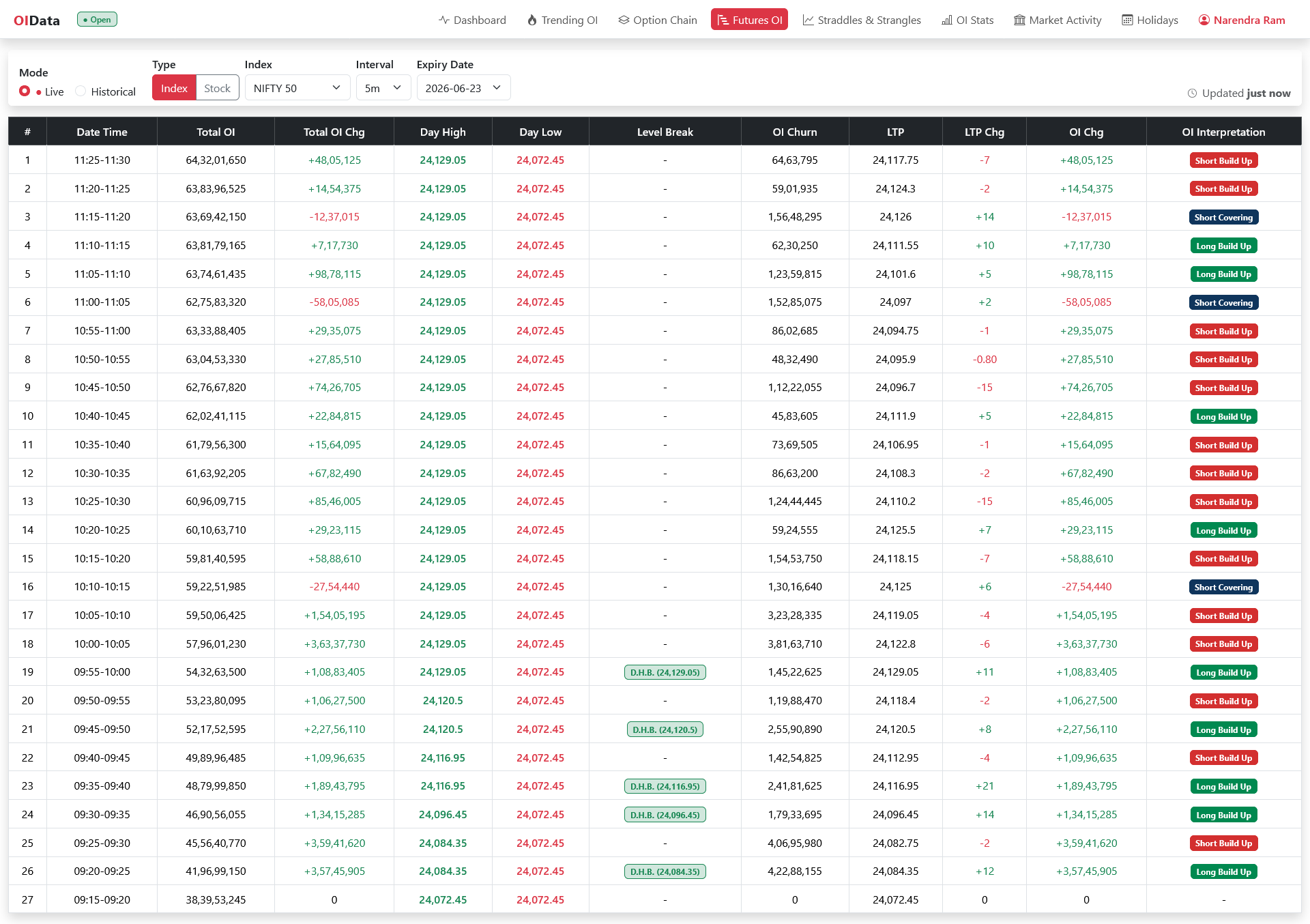
Futures OI gives the cleanest read on directional positioning. Learn to combine it with price for buildup signals, read the basis, and interpret rollovers around expiry.
Guides and explainers on Open Interest, option chains, FII/DII activity and Indian index & stock F&O analysis — written for traders learning to read the data.
Futures OI gives the cleanest read on directional positioning. Learn to combine it with price for buildup signals, read the basis, and interpret rollovers around expiry.
PCR sums up option positioning in a single number, but it's widely misread. Learn the formula, why it's often contrarian, and why fixed thresholds are a trap.
NIFTY and BANK NIFTY look similar but trade differently. Learn why BANK NIFTY is more volatile, how their OI walls behave, and how to adjust your reads for each.
A plain-English glossary of the futures and options terms you'll meet on the option chain and in OI analysis — from ATM to vega, with links to deeper guides.
Open interest is powerful but easy to misread. Here are the ten mistakes that trip up most traders — and how to avoid each one.
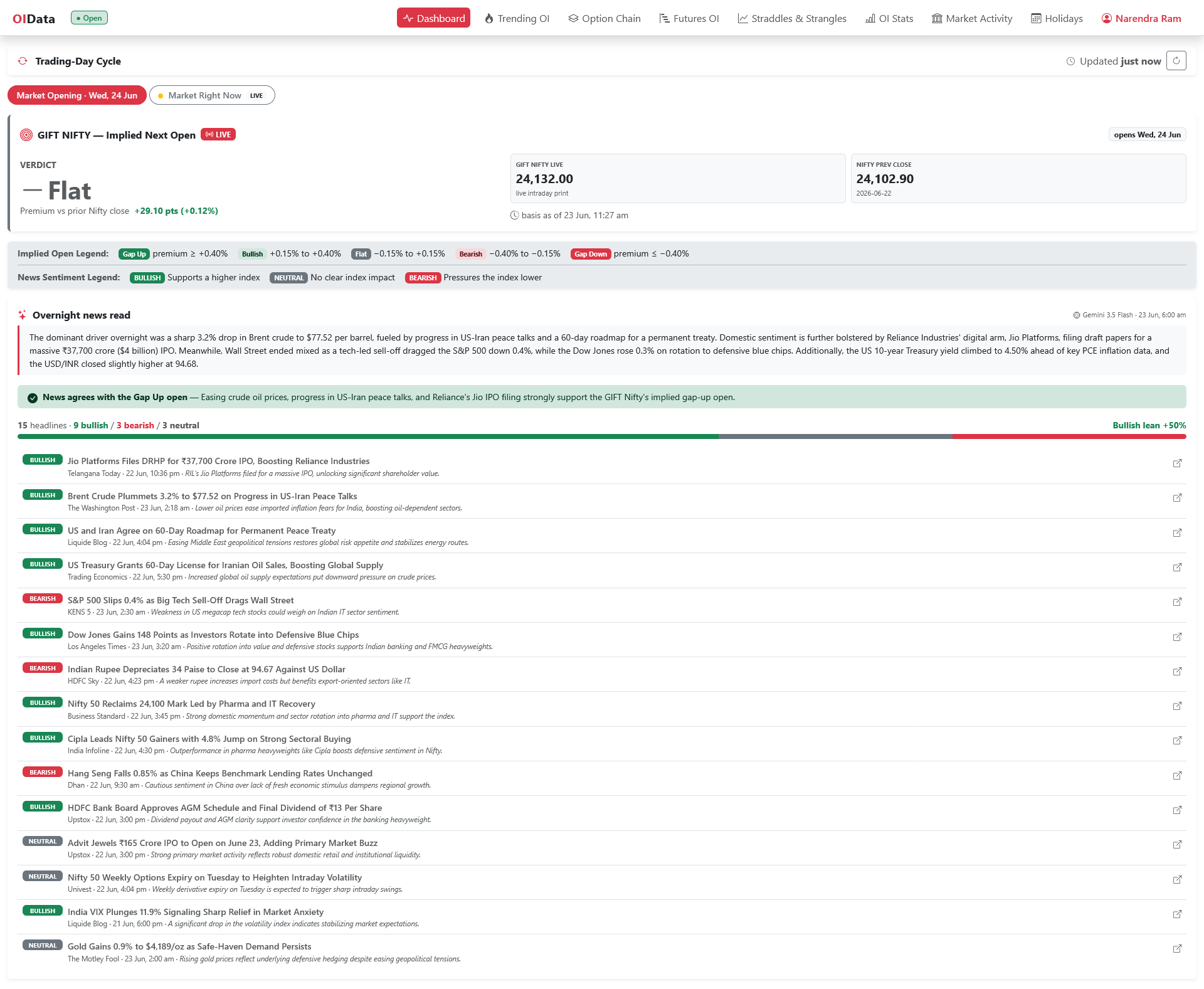
GIFT Nifty trades when Indian markets are shut, giving an early read on how the NIFTY may open. Learn what it is, how to use the implied open, and why the gap can fade.
Expiry day has its own physics — brutal time decay, OI walls that act as magnets, and gamma risk. Here's how to read open interest on expiry and the traps to avoid.
Straddles and strangles let you trade the size of a move instead of its direction. Learn how each is built, when to go long vs short, and the risks that catch people out.
Implied volatility is the market's forecast of future movement, baked into option prices. Learn what drives it, how India VIX fits in, and why IV crush catches buyers out.
NSE breaks F&O open interest into Client, Pro, FII and DII. Learn what each category is, why Pro and FII are watched as "smart money," and how to read the data without falling for myths.
FIIs and DIIs move the Indian market. Learn what the daily buy/sell figures mean, why FII and DII flows often pull in opposite directions, and how to read them without overreacting.
Heavy option open interest marks the levels the market is defending. Learn how to turn the OI on a chain into practical support and resistance — and how to spot a break.
Max pain is the strike where option buyers lose the most at expiry. Learn how it's calculated, why price often drifts toward it, and why it's a tendency — not a rule.
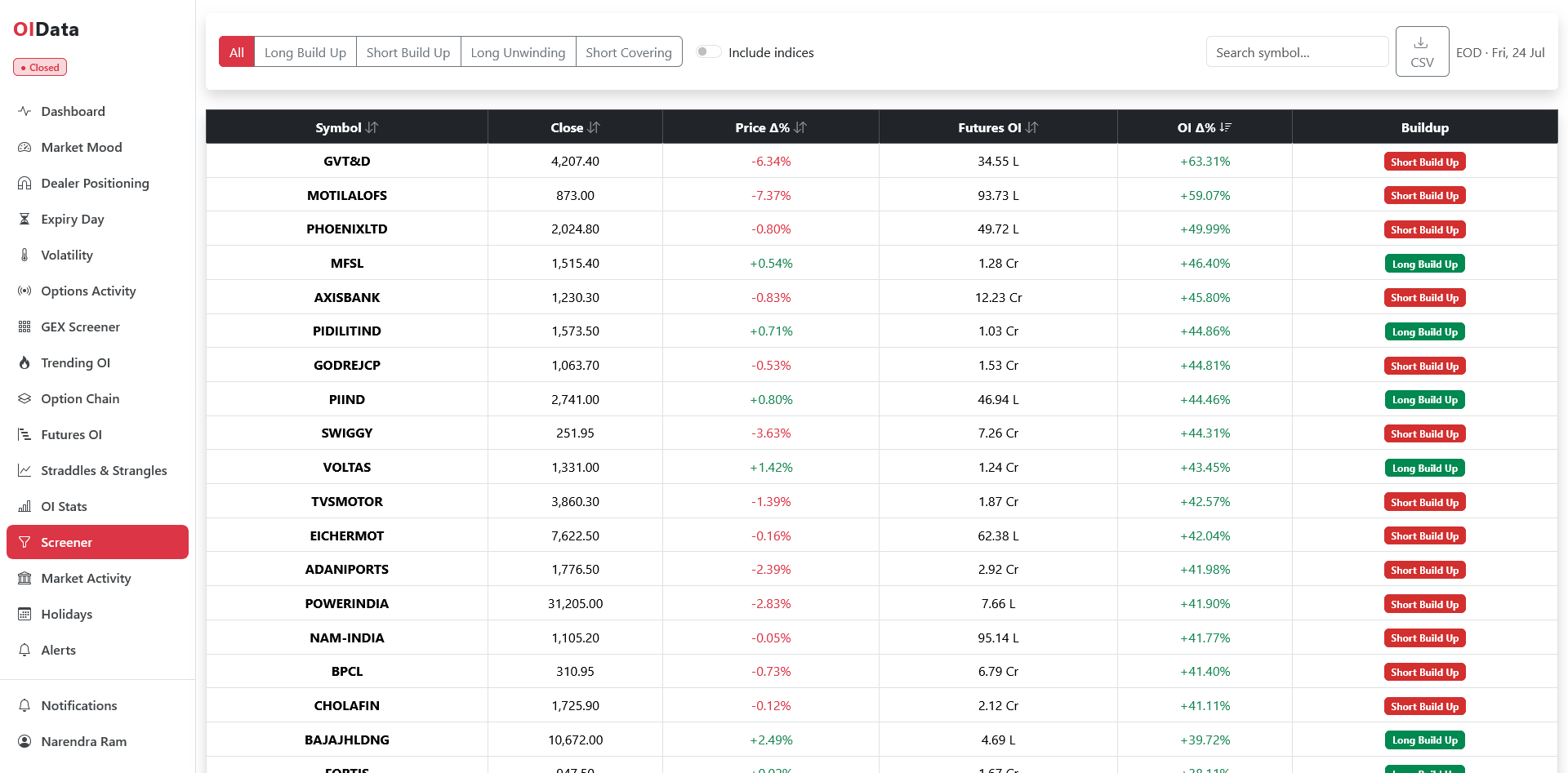
Combine price direction with the change in open interest and you get four signals that describe what the market is actually doing. Here's how to read all four.
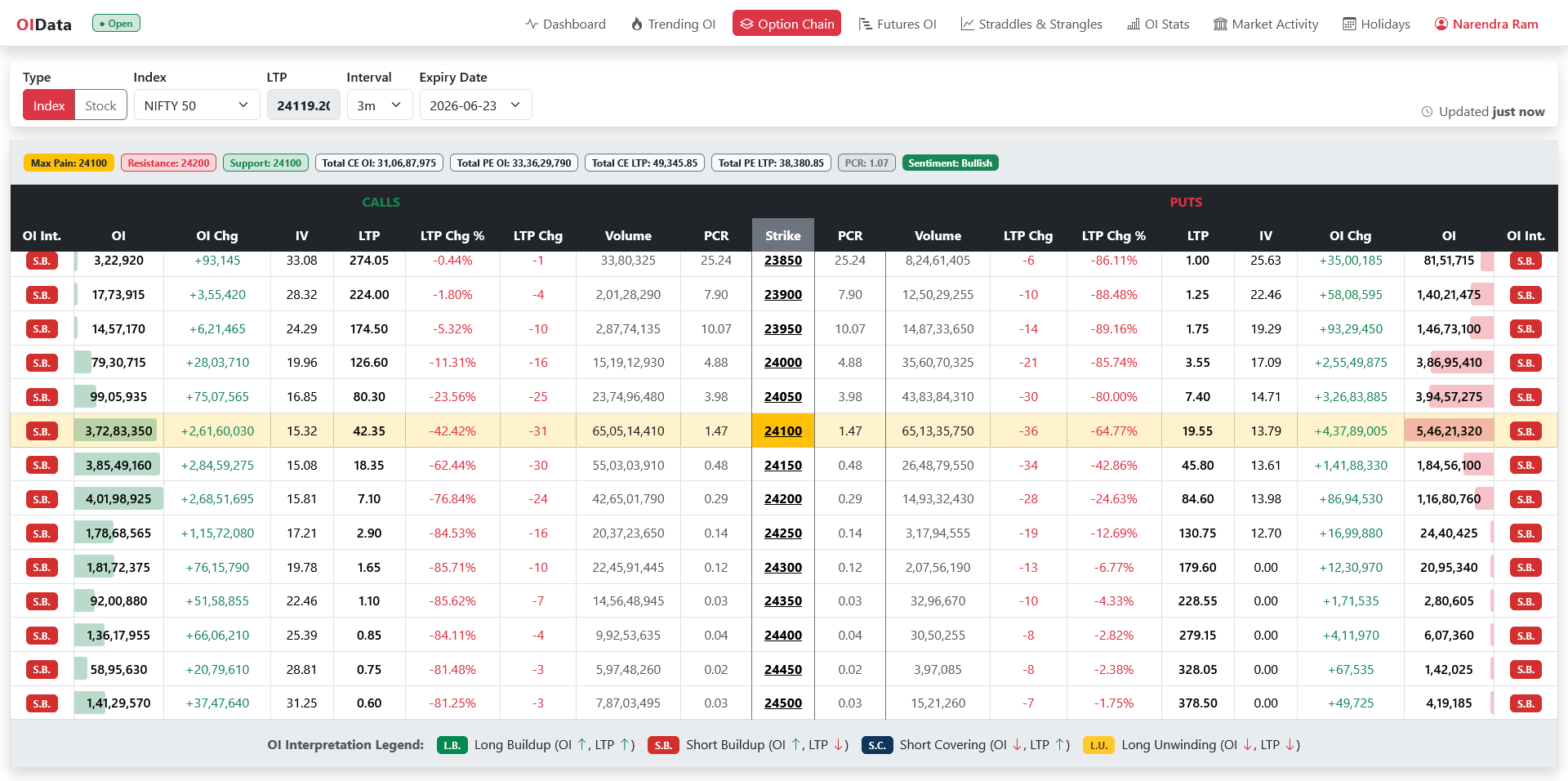
The option chain looks intimidating but follows a simple layout. Learn the columns that matter, how to spot support and resistance from OI, and a quick daily routine.
Volume measures activity; open interest measures commitment. Confusing the two leads to bad reads. Here's how they differ and how to use them together.
Open interest is the number of derivative contracts still open in the market. Here's what it really measures, how it changes trade by trade, and why it matters.